
Technical analysis for 2nd October 2026
The hoped-for relief in global bond markets has started to appear, but it is far too early to call a turning point.
The US 10-year Treasury yield surged as high as 5.34% yesterday before buyers returned, pulling it back towards 5.25% this morning. US equities recovered from substantial intraday losses to finish slightly higher. Unfortunately, the energy picture has worsened again: oil jumped sharply yesterday amid renewed Middle East supply concerns.
Today's US nonfarm payrolls report is therefore particularly important. It could determine whether yesterday's bond recovery develops into something more meaningful or proves to be another temporary pause. The forecast is 90k, down from 162k previously, along with unemployment forecasted at holding at 4.1%. News out at 1330 so expect movement then. We may well see a buy the rumour sell the news pattern play out.
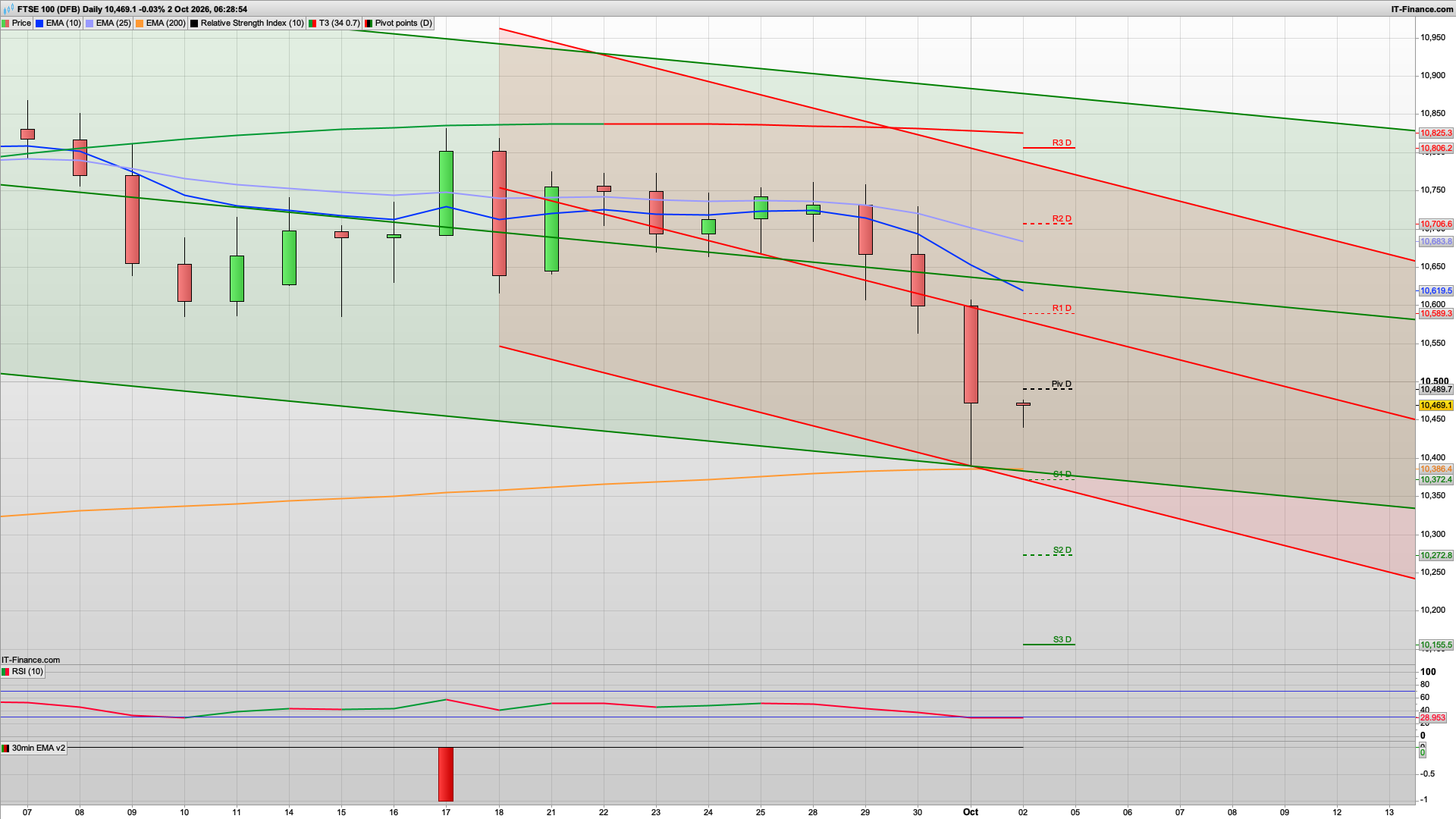
The FTSE100 key support level for today is the 10399 key fib and round number area as well as 10390 being yesterdays low. As such should we see that again today then I would be inclined to try a long here again as essentially the 10415 support level we had for yesterday if 10500 broke held ok. 10386 is also he daily 200ema support, along with the bottom of the Raff channels in this area - all suggesting decent support again.
The bulls however need to break above the daily pivot at the 10489 level to start with which would open up a path towards the 10585 resistance area and somewhere that we may well see the bears have another attempt.
For more more analysis including other markets please join...
Interested in how to start trading the FTSE 100? Frequently Asked Questions on Spread betting
Recommended Broker for trading - MT4/5, web and mobile

IC - offers market leading pricing and trading conditions by providing clients with True ECN Connectivity; this allows you to trade on institutional grade liquidity from the world’s leading investment banks, hedge funds and dark pool liquidity execution venues. Highly recommended!
Join my Membership for Trading Tips, Support and Resistance Levels with Live Trading
If you would like more detailed analysis for FTSE 100, DAX40, Gold and the S&P500, including the trades that I am looking to take myself, then please join my active members community.
Keep up to date with new website posts, free sign up below